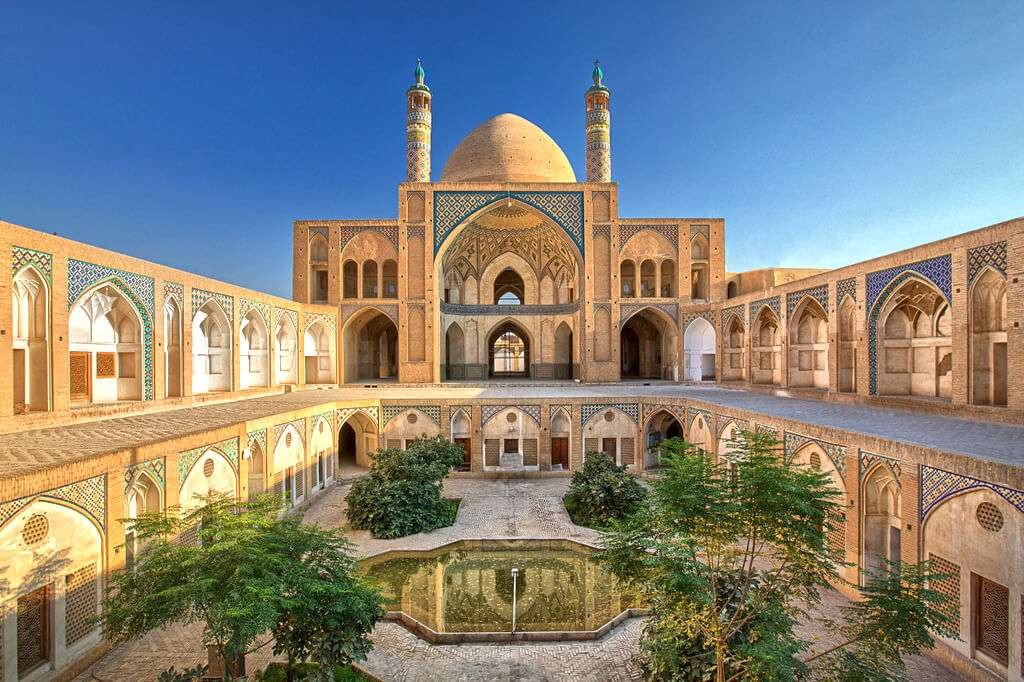
The Madrasah Agha Bozorg in Kashan
This historic building has four eivans and a domed hall with two tiled minarets. The inner courtyard and the rooms arranged around it are recessed, which has a cooling effect, especially in hot summers. In the center of the courtyard, a water basin provides additional cooling.
The dome was built on an octagonal plan and has a double shell. The lower shell carries the load of the roof and transfers it to the pillars, while the outer shell makes the dome appear larger. Light openings and religious inscriptions ensure a harmonious connection between the individual components.
The roofs of the western and winter prayer halls are made of Lemstucco, and the library is located next to them.
The tile work in the vaults is evidence of great traditional Iranian craftsmanship, and under the western Eivan there are graves of several religious personalities who ran the madrassa. It was built in 1268 AD.
The Chahar Bagh Madrasa in Isfahan
The American scholar Arthur Upham Pope, whose monumental “Survey of Persian Art” in six volumes is still an indispensable source for all specialist students, describes this madrassa as “perhaps the last great building in Iran”.
It was built between 1706 and 1714 AD during the reign of the last Safavid Shah, Soltan Hossein.
It is reported that the Shah's mother donated the construction of the building and also the adjoining caravanserai, which was intended to provide support for the religious students. From 1962 to 1965 it was converted into perhaps the most beautiful and luxurious hotel in the Middle East.
The large tiled dome at the north end of the building has large arabesques in yellow, black and white on a bright turquoise background. A band runs around the tambour, with the lapis lazuli base forming an attractive contrast with the white inscriptions.
The brilliance of the color scheme of the dome and minarets is emphasized by khaki-colored tiles in the lower area. The statesman and traveler Lord Curzon, whose 1892 “Persia and the Persian Question” still provides a treasure trove of information, described the madrassa as “one of the most stylish ruins I have seen in Iran.” It
was However, it has been renovated with great talent and, although it is no longer used as a religious school, it is still used as a mosque.
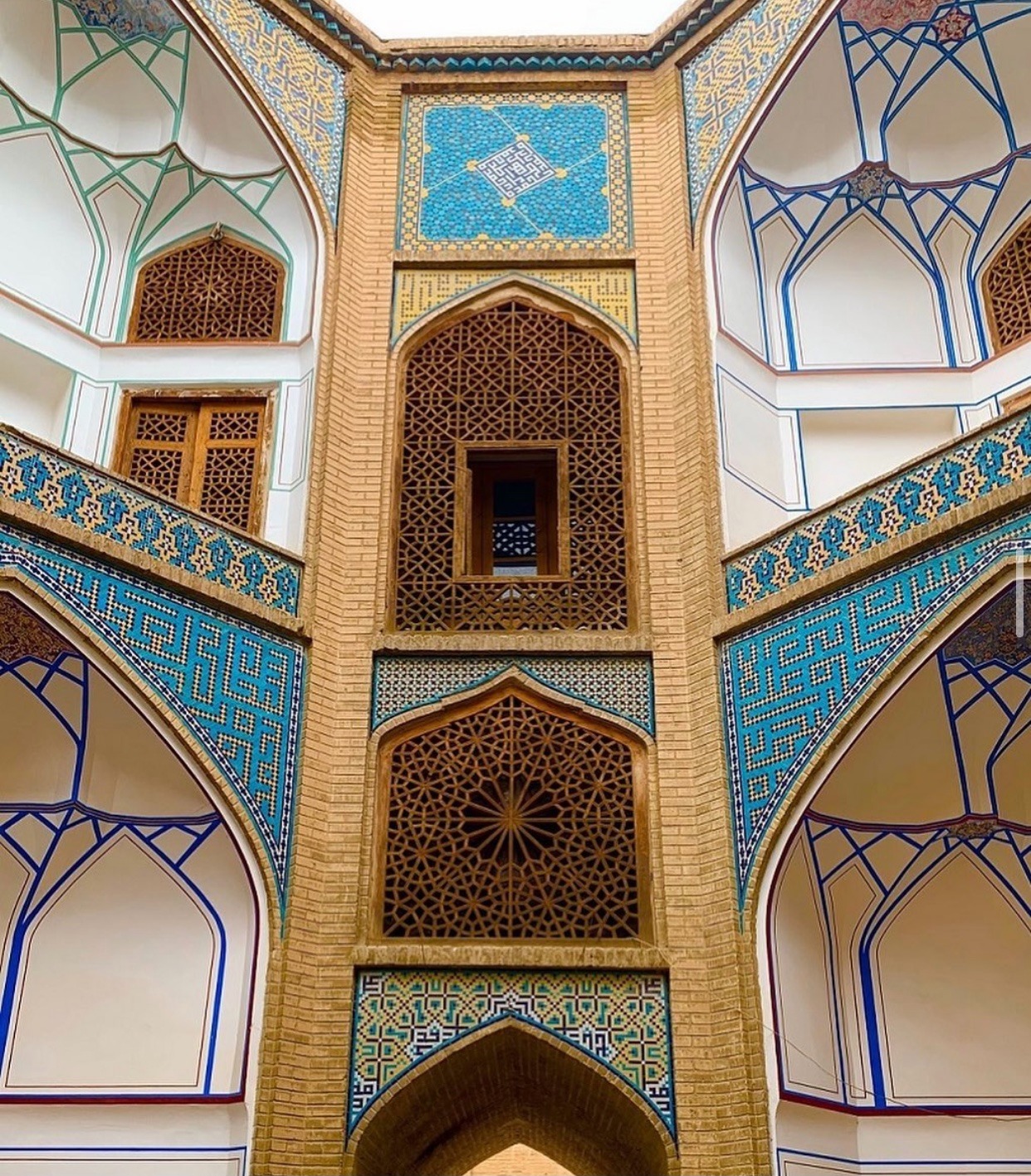
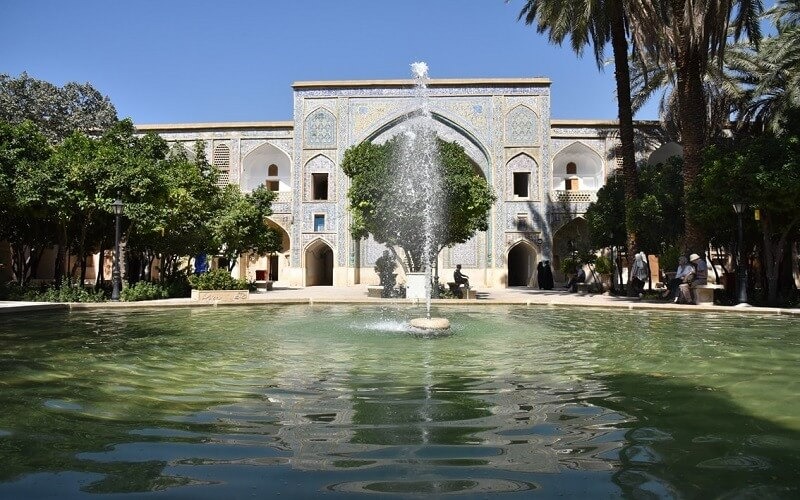
The Khan Madrasah in Shiraz
This historic building is located in the middle of Shiraz. It was built by Allahverdi Khan and his son during the reign of Abbas I. The madrasah has been renovated several times over the years.The Molla Abdollah Madrasah in Isfahan
It is located in the middle of the Isfahan Bazaar. It served as a place of prayer and religious studies and bears the name of a respected clergyman of the time, Molla Abdollah Shushtari. It was built during the reign of Shah Abbas.
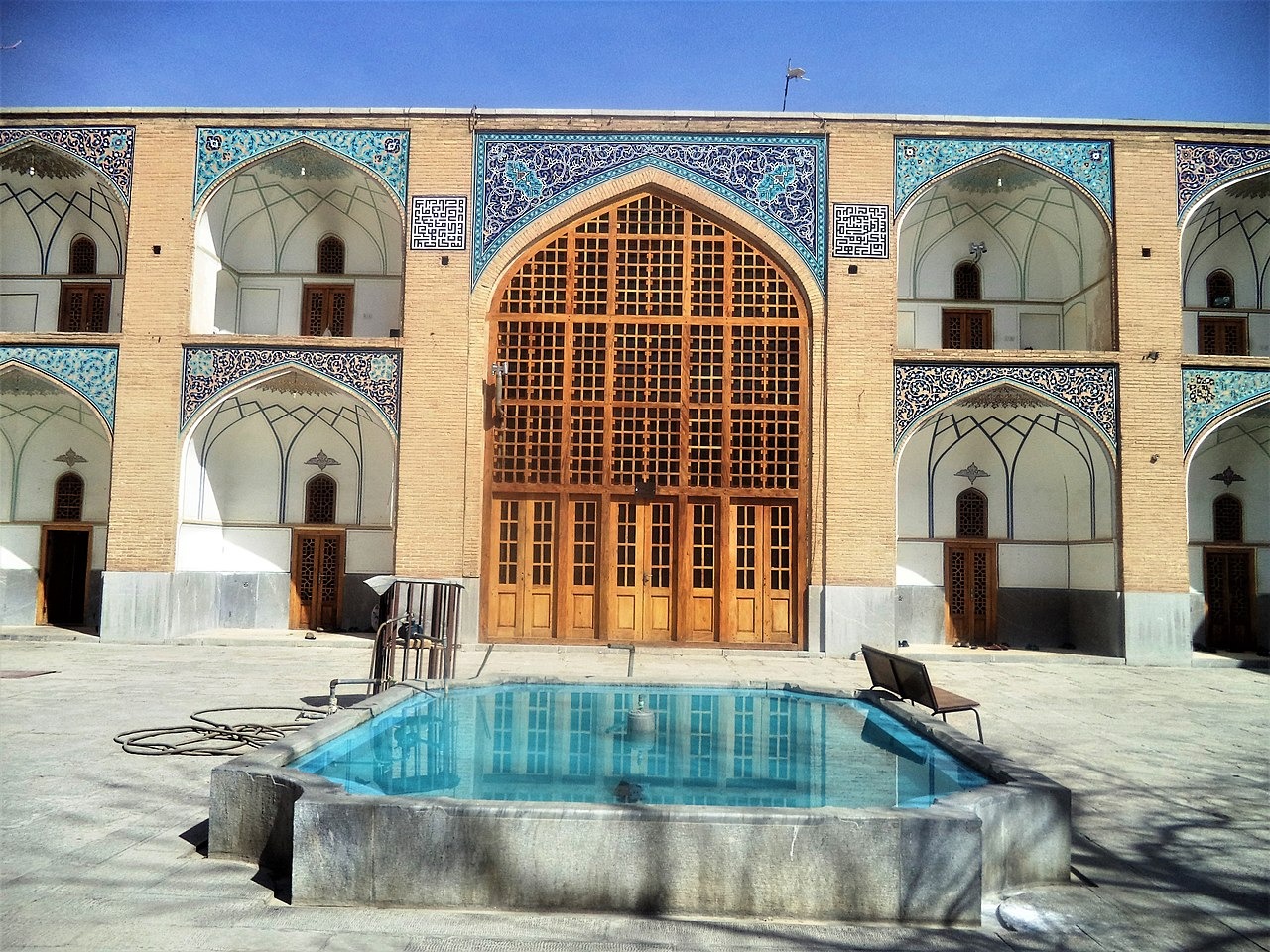
The Nimavand Madrasah in Isfahan
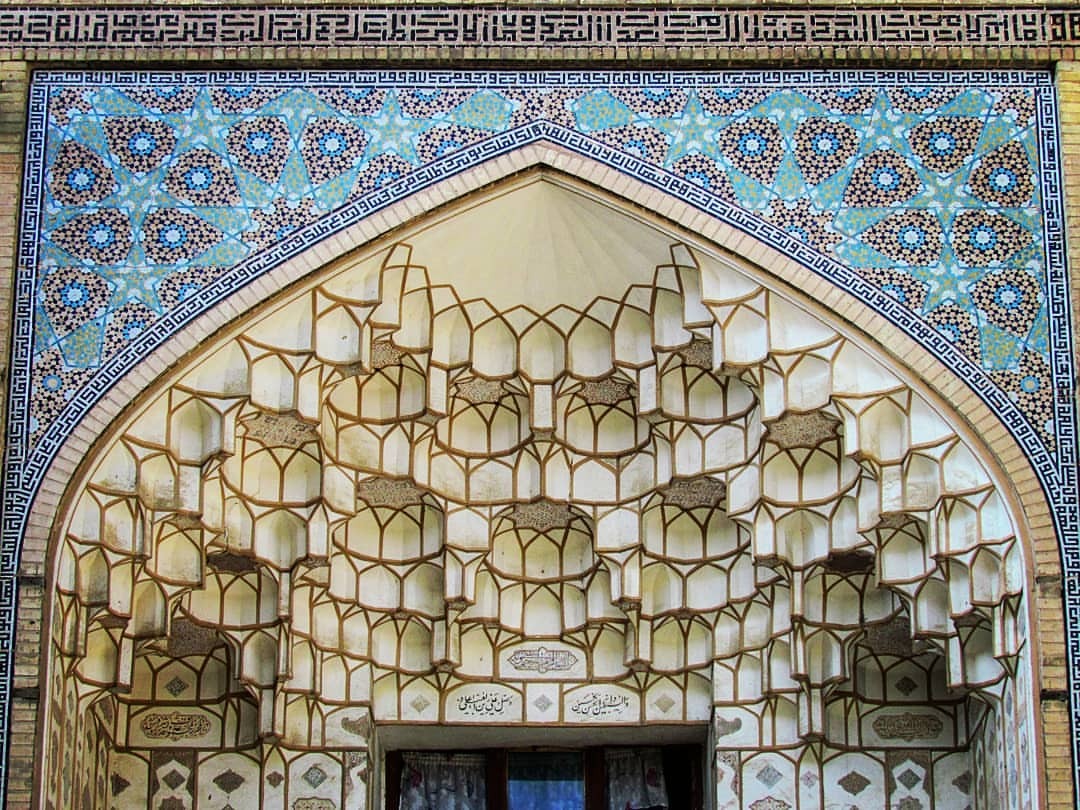
It was built by Zinat Beygum during the reign of the Safavid Shah Soleiman and is considered one of the most famous madrassas in Isfahan, which is highly regarded by religious students. It has artistic tile work and stucco decorations as well as elegant stalactite elements above the entrance portal, a large number of which have survived the test of time along with inscription friezes.No. 403,Aria business center No.77, Anari St., Farahzadi Blvd.
+98 21 88580891
+98 9122573073
etemadi@cyrussahra.com
© Copyright 2023 Cyrus Sahra